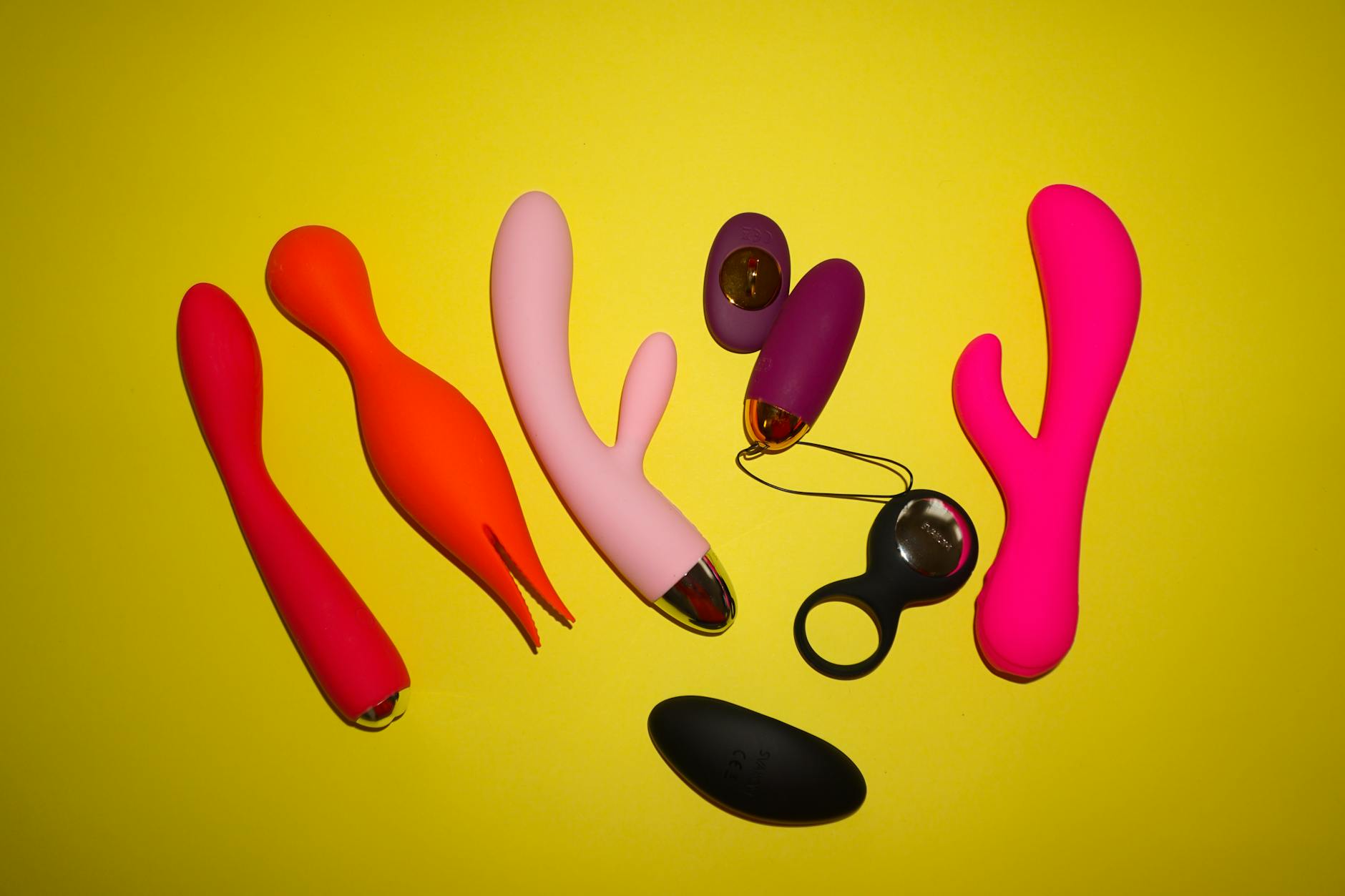
How to Use Lemon Vibrators When You Have Desire But Trouble Reaching Orgasm
You want it. Your body's interested. But the finish line keeps moving. Here's what's actually happening, and how lemon clitoral vibrators fit into the picture.
Let's be real. There's a difference between being turned on and being able to come. You can feel genuine desire, your body can respond, arousal can be building, and then somewhere between point A and point B, the signal gets lost. It's not a failure. It's a common disconnect that most people don't talk about because the conversation usually gets flattened into "I can't orgasm" which misses the actual texture of what's happening.
I see this pattern in my practice constantly. Partners who report strong desire, who are fully engaged, whose bodies are physically responding to stimulation. And yet. The orgasm doesn't arrive. Or it takes so long that frustration kicks in and shuts everything down. Or it feels distant even when it does happen. This isn't a problem with your capacity for pleasure. This is a wiring issue, and it's fixable.
Orgasm is not a simple stimulus-response. It's a chain reaction that requires the right neurological conditions, not just physical stimulation. Think of it less like flipping a switch and more like tuning a radio. You need the frequency, the amplitude, and the clarity all at the same time. Miss one variable and static takes over.
Three things commonly disrupt the pathway:
Performance pressure. The moment you start monitoring whether you're going to come, you've already split your attention. Your nervous system gets caught between arousal and evaluation. This is the most common culprit, and it's especially true in partnered situations where you feel like you should be finishing on a certain timeline.
Insufficient stimulation intensity. This is different from low sensation. You might have good sensation, but the intensity of that stimulation might not be hitting the threshold your nervous system needs to tip from arousal into orgasm. This isn't about being broken. It's about finding the right frequency and pressure pattern.
Nervous system activation. If you're in a low-level state of hypervigilance, stress, or anxiety, your body prioritizes safety over pleasure. The sympathetic nervous system (your fight-or-flight mode) can override the parasympathetic activation that orgasm requires. This is why you might have more success alone than with a partner, or why certain times of day feel different than others.
This is where air-suction technology shifts things. Unlike traditional vibrators that move side to side, lemon vibrators create a gentle suction and release pattern that works in a fundamentally different way on clitoral tissue. For people trying to close that gap between arousal and orgasm, this matters.
Here's why. Suction creates consistent, buildable stimulation without the desensitizing effect of friction. If you've been using wand vibrators or bullet vibrators and found that you get close but can't quite tip over, it's often because the friction-based stimulation can actually numb the tissue over time, requiring you to go harder and harder just to maintain sensation. That escalation rarely leads anywhere.
Lemon vibrators work differently. The pattern is rhythmic, gentle enough not to numb, and focused on a smaller area of tissue. For many people, this creates a clearer pathway from arousal to orgasm because the sensation stays crisp throughout instead of flattening out.
When you're using a lemon vibrator specifically to help bridge that gap, the temptation is to crank it to the highest setting immediately. Don't. The work is in the pattern and placement, not raw power.
Start with pattern 1 or 2 on low. Position the suction cup directly over your clitoris. Spend at least 15 to 20 minutes here before even considering moving to a higher intensity. This is counterintuitive if you're used to vibrators that work through intensity, but the lemon's design works better with patience.
As you build arousal, you might notice that the sensation starts to feel more focused, sharper. That's the sign that your nervous system is integrating the stimulation. Once you're there, then you can explore moving up to pattern 3 or 4. The goal isn't to reach maximum intensity. It's to find the point where the pattern feels like it's pulling the orgasm forward, not pushing it.
Using a lemon vibrator when you struggle with reaching orgasm is also a mindset shift. You're not trying to achieve something. You're exploring sensation. That difference matters more than it sounds.
If you've spent years feeling frustrated about orgasms not arriving, your brain has built some protective scaffolding around sex. Anticipation, evaluation, self-monitoring. All of that is completely rational given your history, but it's also exactly what prevents the nervous system from settling into the state where orgasm can happen.
When you first use a lemon vibrator for this, set a timer for 30 minutes. Not because you need to come in that window, but because it gives you permission to stop chasing the outcome. You're not failing if the timer goes off and you haven't finished. You're gathering information. Does the sensation feel different? Does your body respond differently to this pattern? Are you more relaxed at minute 25 than at minute 5? That data is valuable, and it's the pathway back to orgasm.
If you're with a partner, using a lemon vibrator together can actually reduce the pressure in ways that seem counterintuitive. When you bring in the device, you're removing the expectation that your partner's direct stimulation has to deliver the orgasm. That sounds like you're adding a third wheel, but it actually gives everyone permission to relax.
Your partner can hold the device, or you can guide it. The important part is the conversation before you start. Let them know you're exploring sensation, not chasing a finish. That takes the performance pressure off both of you. Many couples find that when the goal becomes pleasure instead of orgasm, orgasm arrives anyway. The removal of the goal is paradoxically what makes it possible.
If you've been trying for an hour and your body is starting to feel sore or numb, stop. Pushing through when sensation is fading teaches your nervous system that sex is about persistence, not pleasure. That's the opposite of what you're trying to build.
Also avoid switching between tools mid-session if you're already in a vulnerable state about reaching orgasm. This is not the time to try five different devices in one evening. Pick one, commit to 20 to 30 minutes, and see what happens. Consistency with a single device gives your nervous system time to learn the pattern and respond to it.
If you've been using a lemon vibrator consistently for a few weeks and still feel like orgasm is completely out of reach, talking to a sex therapist or gynecologist who specializes in pleasure can help. Anorgasmia, or persistent difficulty reaching orgasm, can sometimes point to underlying things like medication side effects, hormonal shifts, or trauma patterns that benefit from professional support. That's not a failure. That's getting the right tool for the job.
But in most cases, what I see is that when people slow down, remove the performance pressure, and use a device that works with their nervous system rather than against it, the pathway clears. Your body knows how to do this. Sometimes it just needs the right conditions and the right stimulation pattern to remember.
Arousal and orgasm are two different neurological states. You can absolutely be in one without flipping into the other. Orgasm requires sustained parasympathetic activation, which is disrupted by performance pressure, inadequate stimulation pattern, or nervous system stress. When you're monitoring whether it's happening, you're literally preventing it. Lemon vibrators help because their consistent pattern allows you to surrender into sensation instead of chasing an outcome.
No. In fact, the opposite often happens. When you learn what pattern and intensity actually works for your body, you can communicate that to a partner, and partnered sex often improves. You're not replacing human connection with a device. You're gathering information about your own pleasure so you can participate more fully in shared pleasure. Many people who use lemon clitoral vibrators report better orgasms with partners afterward because there's less performance anxiety.
Start with 20 to 30 minutes per session. The goal is not to white-knuckle toward an orgasm in that window. The goal is to let your nervous system settle into the sensation. Some people find what they need in 15 minutes once they've been practicing for a few weeks. Others need 45. There's no magic number. The key is not switching tools or intensities constantly, which keeps your nervous system unsettled.
Absolutely. Your nervous system will choose safety over pleasure. If you're in a heightened state of anxiety, stress, or hypervigilance, orgasm becomes nearly impossible even with the most effective stimulation. That's not a device problem. That's a nervous system regulation problem. Managing that might mean meditation, exercise, therapy, or medication adjustment before the vibrator can do its full job.
If you're noticing numbness after consistent use, you're probably using too high an intensity. This is different from desensitization with friction vibrators. Back down to pattern 2 or 3 and take breaks between sessions. If sensation stays muted even after a few days off, check your lube situation. Water-based lube dries out and can muffle sensation. Switch to a fresh bottle and stay hydrated.
This is a relationship conversation, not a toy problem. Help your partner understand that the device is an addition to shared pleasure, not a replacement for them. If they're feeling replaced, the real issue is probably connection, not the vibrator. Consider using it together, or try a session or two where they control it. Many partners feel less insecure once they're part of the experience. If the insecurity persists, that's worth exploring with a couples counselor who understands sexual health.
That gap between desire and orgasm is one of the most common things I hear about in my practice, and it's also one of the most solvable. You're not broken. Your nervous system just needs the right conditions and the right stimulation pattern to remember what it knows how to do. A lemon vibrator can be exactly that pattern. The work is in removing the performance pressure, being patient with your body, and trusting that sensation matters more than outcome. When you get those three things right, the orgasm usually follows.
Your pleasure deserves time and attention. You deserve to experience the full spectrum of what your body can do. That's not selfish. That's you showing up for yourself. Start there.