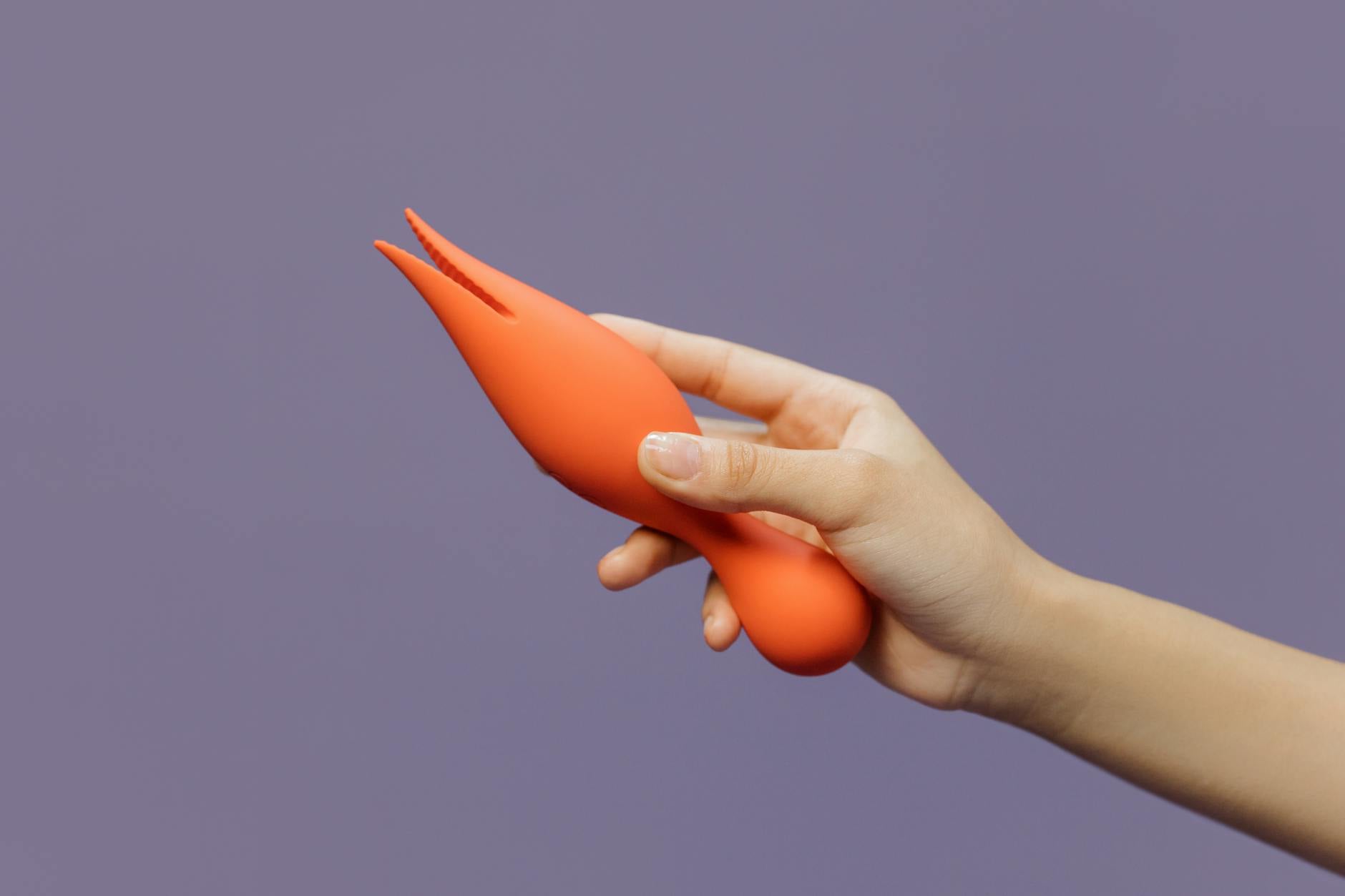
How to Choose the Right Lemon Vibrator for Your Body Type
Not all vibrators work for all bodies. Here's how to match a lemon clitoral vibrator to your anatomy, nerve sensitivity, and what actually feels good to you.
Here's the thing nobody tells you: the "best" vibrator doesn't exist. The best vibrator is the one that matches your body. That sounds obvious until you realize that most people buy toys based on aesthetics, reviews from strangers, or what a partner suggests, not based on whether the device actually fits their anatomy. Then they're disappointed and assume they're broken.
Your clitoris has a unique shape, depth, and sensitivity pattern. Some people's clits sit closer to the surface. Others require deeper suction to feel the full effect. The hood that covers your clitoris might be prominent or minimal. The labia minora might extend further or sit recessed. All of this changes which toy will feel incredible versus uncomfortable.
Lemon vibrators, including clitoral vibrators that use suction, work by creating a seal against your anatomy. If the opening is too large, you lose suction and feel nothing. Too small, and it's uncomfortable or even painful. The wrong width means you're not hitting the most sensitive nerve clusters. Get it right, and you'll have orgasms that feel like your body and the toy were designed together, which, in a way, they can be if you choose correctly.
Add to this the fact that sensitivity varies wildly from person to person. Some vulvas are wildly responsive to suction and gentle patterns. Others need more direct, intense stimulation. Some people's clits become oversensitive after orgasm. Others want to keep going. Your body type gives you a starting point, but your preference is the final word.
Let's map this out so you actually know what we're talking about. Your clitoris is way larger than the visible part. The glans (the tip you can see) is only the external structure. It has roots that branch deep into your body, and many of the nerve endings cluster around the perimeter and in the hood. When you're choosing a lemon vibrator or any clitoral vibrator, you're basically choosing which part of this structure you want to target.
If your clitoral glans is relatively small and tucked under a thick hood, a smaller-opening toy with concentrated suction will hit better than a wide-opening device. If your glans is more prominent and your hood is thinner, you have more flexibility. You might prefer a wider opening that creates suction across a bigger surface area.
The labia minora factor matters too. If your inner lips extend significantly beyond your outer lips, a toy that presses directly against your vulva without room for this tissue won't feel right. You need a device with slightly more give or a shape that accommodates the contours. If your inner lips are minimal, a sleeker profile might be exactly what you need.
I'm hesitant to box anatomy into categories because bodies don't fit neatly into buckets. But for practical guidance, here's what I see clinically.
Type 1: Compact and recessed. Your clitoris is small, sits partially under the hood, and your vulva has a neat profile with minimal labial extension. You likely benefit from a toy with a smaller opening and concentrated suction. A lemon vibrator designed with precision is ideal. You don't need a lot of coverage; you need accuracy. Start on the gentlest settings because you're probably sensitive, and the seal is so efficient that even low suction creates strong stimulation.
Type 2: Prominent and full. Your clitoral glans is visible without much hood coverage, and your labia minora are pronounced. You need a toy that can accommodate this fuller anatomy without pinching or creating discomfort. A wider-opening device gives you room to position yourself comfortably. You might actually prefer a clitoral vibrator that creates suction across a slightly larger surface, distributing stimulation in a way that feels balanced rather than painfully concentrated.
Type 3: Asymmetrical. One side of your vulva is noticeably different from the other, or your clitoris sits off-center. This is extremely common and not abnormal in any way. You probably find that positioning matters more than it does for other people. You might prefer a toy you can angle slightly or a device with a shape that lets you customize where the suction centers. Flexibility is your friend here.
Type 4: Variable sensitivity. Your clitoris might feel responsive in certain positions and nearly numb in others, or your sensitivity shifts throughout your cycle or with arousal level. You benefit from a vibrator with multiple patterns and intensity levels so you can adapt in the moment. You're not bouncing between toys; you're fine-tuning the one you have. Look for range, not just power.
I'm not asking you to break out a ruler in a weird way. But honest assessment helps. When you're aroused, look at your vulva in a mirror and note a few things.
How visible is your clitoral glans? Can you see it clearly, or is it mostly covered? How much do your inner lips extend? Do they stick out past your outer lips, or are they pretty flush? When you touch your clitoris during arousal, does it feel like a distinct button, or is it more diffuse?
Next, think about what's felt good in the past, whether that's fingering, oral sex, or a toy. Did you prefer something that felt like a focused point of pressure, or broader, wider contact? Were you most sensitive to the tip of your clitoris, or the entire area around it?
That information is worth more than any body-type category. It's telling you which sensation pattern your nervous system prefers.
A lemon vibrator uses vibration. It buzzes against your clitoris at varying frequencies and patterns. This works brilliantly if you love vibration, if your clitoris responds quickly to that kind of stimulation, or if you have reduced sensation and need that extra input to feel pleasure. Lemon clitoral vibrators are also forgiving on positioning. You don't need a perfect seal; the vibration does the work.
Clitoral suckers like the Lem use suction and gentle pulsing. This mimics what oral sex does. It works particularly well if your clitoris is sensitive to direct contact, if you love the feeling of indirect stimulation, or if you want something that doesn't feel like buzzing. Suction requires a seal, so your anatomy has to cooperate, but when it does, the sensation is often described as more intense and more localized than vibration.
Some bodies prefer one. Many bodies love both for different reasons. The key is knowing which camp you're in before you buy.
How you position yourself matters wildly and changes based on your anatomy. Some people can lie flat on their back and have perfect contact with a toy. Others need to be on their side, elevated on a pillow, or in a seated position where gravity and angle work with their body instead of against it.
When you're choosing a vibrator, think about how you usually like to receive pleasure. If you're someone who likes to be hands-free, you need a toy that stays in place without you gripping it or shifting constantly. If you prefer to have control and move, you want something maneuverable. If you're with a partner and want them involved, you need a device that works in positions where two people can be intimate, not something that demands you stay perfectly still.
Most reputable toy brands, including Hello Nancy, offer clear descriptions, videos, and sometimes even return policies. Use those. Read reviews, yes, but read the ones from people describing their anatomy and what worked or didn't. A five-star review from someone built completely differently from you might not translate.
When your toy arrives, spend time with it before using it for pleasure. Hold it. Look at the opening size relative to your vulva. Imagine where it would sit. Lubricate the opening slightly and feel how the seal might work. This sounds clinical, but it's actually the fastest way to know if you've made a good choice before you get into the moment.
If it feels wrong during exploration, it's probably going to feel wrong during pleasure, and that's useful information to have quickly. You can exchange it instead of pushing through discomfort because you think you "should" like it.
Lubricant changes everything about how a toy interacts with your body. More lube makes a seal easier to achieve and maintain. It also reduces friction if you're sensitive or if the opening size isn't perfectly matched. Quality water-based lubricant is your friend regardless of your anatomy, but it matters even more if you're working with a toy that's slightly larger or smaller than ideal.
This is why starting with a good lube is actually just smart. You're not covering up a bad choice; you're optimizing the tool you've chosen. And if you ever find that a toy isn't working, before you replace it, try a different type or amount of lubricant. You might surprise yourself.
If you're using a vibrator with someone, your anatomy matters to them too. Some partners worry that a toy means they're doing something wrong. Knowing your body type and being able to say, "My clitoris responds better to suction than vibration," or "I need something narrow to feel the intensity," removes vagueness from the conversation. It's not "You're not doing it right." It's "Here's what my body likes." That's powerful information for intimacy.
If you have the right toy but it's not working, sometimes the answer isn't a new toy. Reduced sensation from stress, anxiety, medication, or hormonal shifts can mean a favorite vibrator suddenly feels weak. Why lemon vibrators feel different when you're stressed covers this in depth, but the short version is: adjust the setting, give yourself more warm-up time, and rule out external factors before you assume the toy is wrong.
If a toy genuinely doesn't fit or feels uncomfortable, that's different. That's a replacement situation. But if it's about intensity or responsiveness, that's usually a body state issue, not a toy issue.
Your clitoris becomes more or less sensitive based on your cycle, your age, your stress level, and a dozen other factors. A toy that felt perfect three months ago might feel too intense now, or not intense enough. This is normal. Your body type doesn't change, but your needs do. Having a vibrator with multiple intensities and patterns means you can adapt without replacing the whole thing.
The lemon clitoral vibrators and suction-based designs usually offer pattern variation for exactly this reason. You're not locked into one sensation. You're choosing what your body wants that day.
Sensitive clitorises respond quickly to light touch and often feel almost too intense if overstimulated. Desensitized clitorises require more direct, sustained pressure to build arousal. Neither is better or worse. They just require different approaches. If you usually orgasm within five minutes of direct stimulation, you're likely more sensitive. If it takes 15 to 20 minutes or requires strong, consistent contact, you're probably less sensitive. A lemon clitoral vibrator works for both, but the settings and patterns you choose will differ.
Maybe. After childbirth or pelvic surgery, your tissue might swell or feel different temporarily. Your pelvic floor muscles might be weaker or tighter. A toy that fit before might feel wrong now. Give yourself recovery time, then test it with fresh eyes. Many people return to their favorite toys. Some find they prefer something different. Why lemon vibrators make recovery sex easier after childbirth discusses this transition in detail.
Asymmetrical vulvas are the norm, not the exception. If a toy feels off-center, try angling it slightly or using pillows to adjust your position. Some people find that a wider-opening toy gives them room to position it just right. Others prefer a narrow, precise tool that they can angle exactly. Experiment with positioning before assuming the toy is wrong. Most asymmetry issues resolve with the right angle and a bit of patience.
Lube isn't marketing. It genuinely changes how a toy works with your anatomy. Even if you self-lubricate well, adding a quality water-based lubricant improves seal quality, reduces friction, and makes the entire experience feel better. It's especially helpful if a toy is slightly too large or if your sensitivity is higher than average. Think of it as fine-tuning, not covering up a bad fit.
If you love oral sex or have historically responded well to indirect, broad stimulation, suction might be your thing. If you prefer something more direct, focused, and buzzing, vibration is your lane. You don't have to choose forever. Many people own both and use them depending on mood and context. Start with whichever matches your historical pleasure patterns.
Bodies are different. A toy that's perfect for someone with a small, tucked clitoris might be useless for someone with a prominent one. Reviews, anatomy, sensitivity, and positioning all factor in. Just because a toy worked beautifully for a friend doesn't mean your body type will vibe with it. Choose based on your anatomy and preferences, not theirs.
Your body deserves a vibrator that actually fits it. Taking ten minutes to think about your anatomy, your sensation preferences, and how you like to receive pleasure is the fastest way to find something you'll love. A lemon vibrator or any clitoral vibrator is only as good as its fit to your unique body.