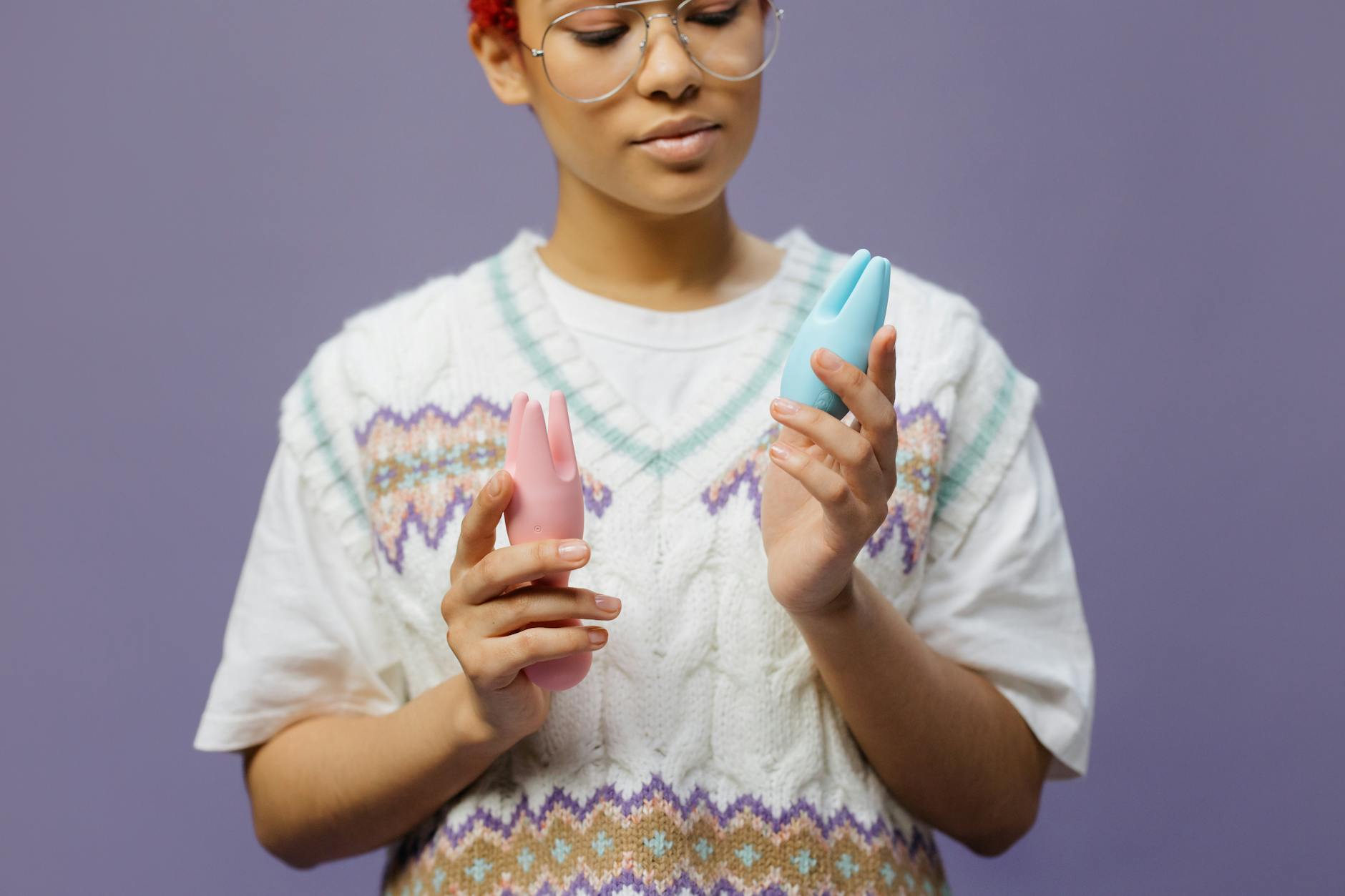
Why Lemon Clitoral Vibrators Work Better After Reconnecting Emotionally
Your body knows when your heart has come back online. Here's what the research says about emotional intimacy and physical pleasure, plus how to use that shift to your advantage.
Let's be real: a clitoral vibrator is just a vibrator until it isn't. Same toy, same settings, same body. But something shifts the moment emotional connection returns to a relationship. Partners report that orgasms feel different. That arousal builds faster. That even a lemon vibrator, which they've had for years, suddenly unlocks sensations they'd forgotten were possible.
Here's what happens in your brain when emotional distance closes. The prefrontal cortex—the part that worries, plans, and overthinks—quiets down. Your amygdala, which processes threat and safety, recalibrates. When your partner feels trustworthy again, your body stops running a background anxiety program. That frees up a staggering amount of neural real estate for sensation.
This matters for vibrator use because arousal requires what researchers call "attentional capacity." If part of your brain is monitoring the relationship (Is this safe? Are they really present? Do they want me?) then another part of your brain can't fully engage with physical pleasure. It's not that you can't orgasm. It's that the experience feels thinner, less embodied, more performative.
When emotional reconnection happens, you get your full attentional budget back. Your clitoral vibrator—whether it's a lemon sucker or any other device—now has access to your complete nervous system instead of a fraction of it.
Lemon clitoral vibrators, particularly air-suction styles like the Lem, rely on rhythmic stimulation that your body interprets through multiple channels. Your nervous system is reading not just the physical sensation but also your psychological state. In a state of distance or ambivalence, you might need higher intensity, longer warm-up, or repetitive use to reach orgasm. In a state of connection, the same vibrator can trigger response at lower settings, faster.
Some of this is hormonal. Emotional intimacy and reconnection trigger oxytocin and increased dopamine sensitivity. Your genital tissue actually becomes more responsive. But much of it is neurological. When you feel emotionally held, your body doesn't need to work as hard to convince itself that pleasure is safe.
I've had countless clients report that after a genuine emotional repair conversation with their partner, using a lemon vibrator felt almost shocking in its intensity. Not because the device changed. Because they had.
This isn't about a date night or an apology text. Genuine emotional reconnection involves a few specific elements. First, visibility. Your partner has to know what's actually happening in your inner world, not the polished version. Second, response. They have to care about that information and act on it, not just receive it. Third, reciprocity. You have to know what's happening in theirs.
Without those three layers, you might have a pleasant evening together. But your nervous system still operates in low-level alert. The part of your brain that's tracking the relationship health doesn't fully relax.
That's why couples often report that sex feels better after a real conflict resolution than it does after a surface reconciliation. Conflict that gets addressed creates proof that the relationship can handle difficulty. That proof unlocks your body.
One of the clearest markers of emotional reconnection is a shift in how vibrators feel in partnered versus solo contexts. When emotional distance exists, the difference is small or nonexistent. Both contexts feel similarly muted. When emotional connection returns, the gap widens dramatically.
Partned use of a lemon clitoral vibrator after reconnection often feels more intense, builds faster, and produces more full-body response. Solo use still feels good, but different. Less anchored. This is partly because your partner's presence and attention literally changes your nervous system state. You're not just being stimulated. You're being witnessed and desired.
This effect intensifies if your partner is actively engaged. If they're using the vibrator on you, if they're narrating what they're seeing, if they're asking what you want and actually listening. The more your partner shows up, the more available your body becomes.
If you're in a phase where emotional distance has made your clitoral vibrator feel less effective, you're not broken. Your system is functioning exactly as it should. It's protecting you by keeping arousal cautious until safety is restored.
Rebuilding emotional intimacy doesn't require therapy sessions or grand gestures, though both can help. Start smaller. Share something true that feels vulnerable. Listen when your partner does the same without solving it or dismissing it. Make decisions together about something that matters. Show up when you say you will.
Then notice what happens when you use your vibrator again. You might be surprised at how quickly your body responds once the nervous system has permission to relax.
Sometimes emotional repair happens and physical pleasure is still muted. This often signals that something else is at play. Medication side effects, hormonal changes, unprocessed trauma, or depression can all suppress arousal even when emotional safety is restored.
If you've done the emotional work and your lemon vibrator still doesn't feel like it used to, that's worth exploring with a therapist or doctor who understands sexual health. The reconnection you've built is real and important. It just might need support from other tools to translate fully into sensation.
Here's what often happens once emotional reconnection unlocks better vibrator response. The improved orgasms create more oxytocin. More oxytocin makes you feel more bonded. You're more inclined to be vulnerable, to initiate, to show up emotionally. Your partner feels that shift and shows up more too. The relationship deepens. Vibrators feel even better. It's a virtuous cycle.
The reverse is also true. If emotional distance persists, orgasms stay muted, oxytocin stays low, you both feel less bonded, vulnerability drops, distance increases. The feedback loop goes the other direction.
Understanding this dynamic changes how you relate to tools like lemon clitoral vibrators. They're not just about physical mechanics. They're a real-time window into your relational nervous system. If a vibrator that used to work suddenly doesn't, that's often less about the device and more about the emotional weather in your relationship.
Once you've rebuilt emotional connection and your body starts responding fully again, you can get deliberate about the experience. This is a great time to explore new patterns or sensations, because your nervous system has bandwidth. Try different intensities on your lemon vibrator. Experiment with timing or rhythm. Ask your partner what they notice or what they want to try.
The point isn't to fix what's broken. The point is that reconnection has given you access to a part of your pleasure that distance locked away. That's worth tending to deliberately.
This might sound like a lot of work for something that should just happen naturally. And you're right. In a perfect world, emotional intimacy and sexual response would flow together effortlessly. We don't live in that world. We live in one where work, stress, resentment, and simple neglect gradually build walls between partners. Those walls have a real cost: your pleasure suffers.
But here's the part that makes the investment worth it. The couples I work with who rebuild emotional connection don't just get better vibrator responses. They get better sex. Better conversations. Better conflict resolution. Better day-to-day affection. The vibrator is just the most obvious marker of a much larger shift.
Your body knows when your heart has come back online. Trust that knowing.
Partially. Your own nervous system still benefits from feeling safe and grounded. If you've been in a season of stress or disconnection from yourself, rebuilding self-compassion and presence can genuinely improve how your lemon vibrator feels. The effect is usually less dramatic than partnered reconnection, but it's real. Solo pleasure is often about creating internal safety and attention.
Often within days. Some couples notice a shift within a single intimate session after having a real reconnection conversation. That said, the deeper the distance was, the more time it might take for your body to fully trust the shift. Think of it like your nervous system learning a new pattern. The physical change can be quick. The deep embodiment takes a few weeks.
Yes, though the timeline is different. With a new partner, emotional connection builds gradually and pleasure often deepens alongside it. With a long-term partner after distance, the reconnection can feel dramatic because you're literally remembering what it felt like before. The contrast is sharper. Both trajectories work. They just feel different.
That's a real constraint, and it matters. You can use your lemon vibrator and experience pleasure solo. You can practice self-connection and safety. But the specific magic of partnered reconnection requires a partner who's willing to show up. If that's not available, individual work with a therapist can help you grieve that limitation and still access pleasure in other ways. You deserve both emotional intimacy and good sex. Sometimes they require choosing a partner who can provide both.
Not inherently. What matters is that the vibrator feels good to you. That said, air-suction styles like lemon clitoral vibrators often feel particularly responsive to nervous system shifts because they offer gentler, more rhythmic stimulation. If you're newly reconnected and your body is opening up, a device that allows for longer, slower exploration might feel better than something intense. But the best vibrator is always the one that works for your body.
Absolutely. If you understand that vulnerability and presence unlock both emotional intimacy and physical pleasure, you can be more deliberate about creating both. Try using your lemon vibrator together while staying emotionally present with each other. Make eye contact. Stay in conversation. Notice what happens when you bring conscious attention to the experience instead of just going through the motions. That's when reconnection becomes not just something that happened but something you actively tend to.
Ready to explore what's possible in your relationship? If you're navigating reconnection or working through relational challenges, I'm here to help. Reach out to Hello Nancy to chat about what you're experiencing.