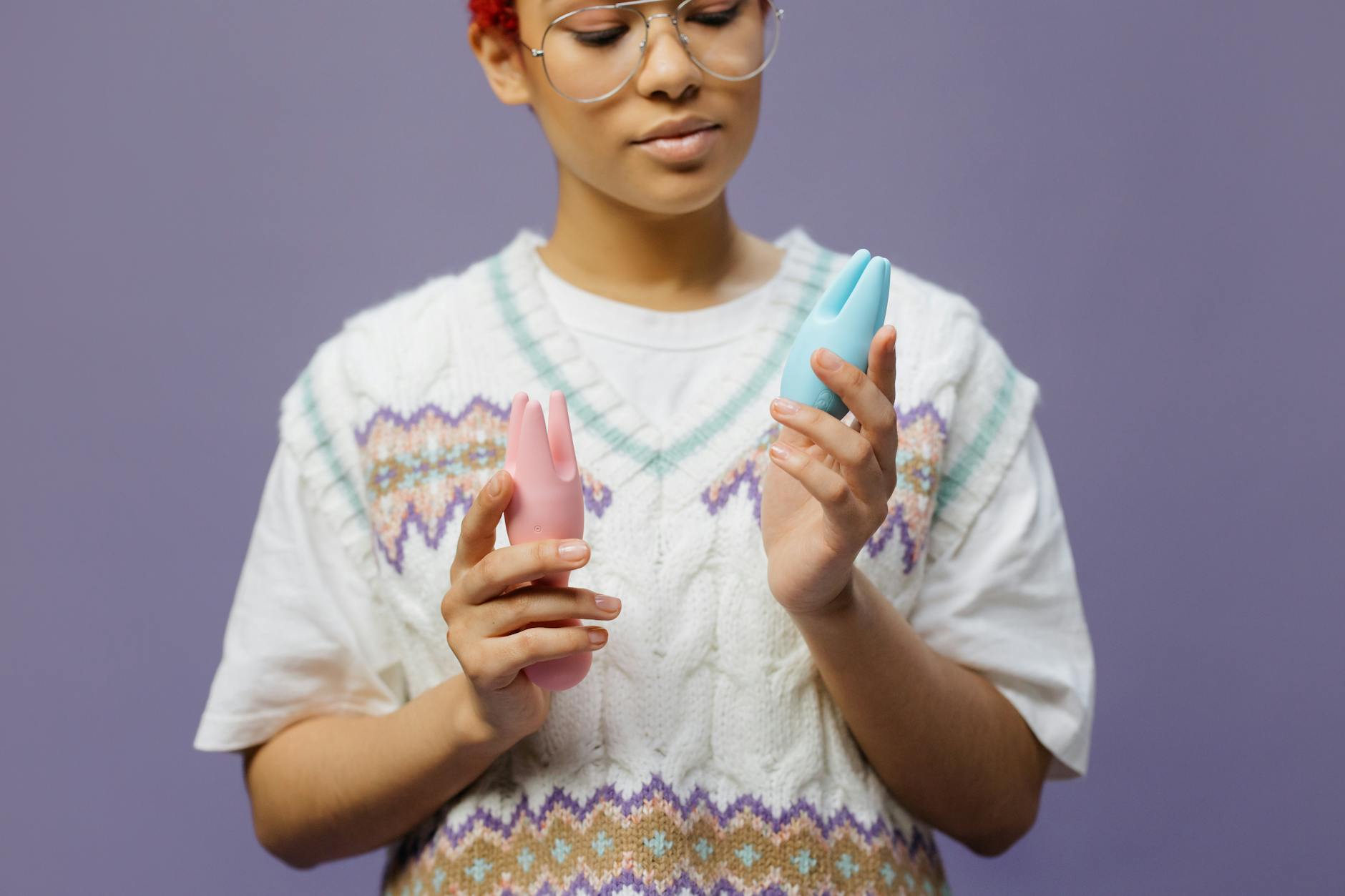
How to Use Lemon Vibrators When Your Partner Refuses to Participate
You want to explore pleasure together. They're not interested. Here's how to reclaim your sexual autonomy, use lemon clitoral vibrators without shame, and navigate the gap between what you want and what they're willing to give.
Let's be real. You've bought a lemon clitoral vibrator, or you're thinking about it, and your partner's response ranges from "not interested" to "I'd rather you didn't." Maybe they think toys threaten them. Maybe they believe pleasure is something that happens between partners or not at all. Maybe they're uncomfortable with their own body and yours by extension. Whatever the reason, you're stuck in a gap between what you want and what they're willing to support.
Here's what I know from working with couples: your sexual autonomy is not negotiable. Using lemon vibrators, exploring your pleasure, understanding your own body.these aren't extras that require permission. They're foundational to your sexual health and to long-term relationship satisfaction. The refusal to engage doesn't mean you have to shrink.
Most resistance isn't really about the toy. It's about what the toy represents. When someone refuses to participate in pleasure exploration, they're often protecting something: ego, control, outdated beliefs about what sex "should" look like, or genuine insecurity about their own adequacy. Understanding the root doesn't excuse the behavior, but it does change how you respond.
Common reasons partners resist toy play include fear that the toy will replace them, anxiety about performance, religious or cultural conditioning against pleasure, shame about their own bodies, or control dynamics. Some partners believe that if you need a toy, they've failed as a lover. Others grew up in environments where sexuality was never discussed, let alone celebrated.
None of these reasons are your responsibility to fix. You can be empathetic to their discomfort while remaining firm about your right to your own pleasure.
This is the crucial distinction most people miss. You don't need to negotiate your right to solo pleasure. You're not asking for approval or partnership in this moment. You're informing them about a choice you've made.
There's a difference between "Can I use a vibrator?" and "I'm going to prioritize my pleasure, including with toys. This is about me, not about us." The first is a question that invites debate. The second is a statement of boundary.
Here's how that conversation might go: "I want to explore my pleasure on my own terms. That includes using lemon vibrators. This isn't a reflection on you or our relationship. It's about me taking responsibility for my own satisfaction. I'm telling you so there's no secrecy, but I'm not asking for permission."
Then stop explaining. Explanation invites argument. People who need to understand will ask. People who want to derail the conversation will keep probing for weaknesses in your logic. Don't give them any.
Solo pleasure is not a consolation prize. It's not what you do when your partner fails you. It's a complete and legitimate form of sexual expression. When you use a lemon clitoral vibrator alone, you're not settling. You're claiming agency.
Create space and time that belongs to you. This might be when they're not home, or after they're asleep, or in a locked bathroom with headphones. Whatever feels manageable and sustainable. The goal is consistency, not secrecy. You're not hiding your pleasure to shame yourself. You're protecting it because they've indicated they won't support it.
Start slowly. Many people new to using lemon sexual toys, especially when they're doing it solo amid relationship tension, rush or feel anxious. Give yourself 15 to 25 minutes without clock-watching. Explore what patterns on your lemon vibrator feel best. Notice what your body responds to. This is data gathering, not performance.
If guilt or anxiety arises while you're using your toy, pause and notice it. Don't judge it or try to push through it. Sit with it for a moment. Often, guilt lives in the story we've inherited about our own sexuality, not in the act itself. Your pleasure is not wrong.
Here's the hard part: using toys won't fix a relationship where pleasure is consistently devalued. A vibrator is a tool for your own satisfaction, not a Band-Aid for incompatibility.
If your partner's refusal to engage is part of a larger pattern of control, rejection, or emotional withdrawal, you're dealing with a relationship issue, not a toys issue. Consider whether this is a person who respects your autonomy in other areas. Do they control your spending, your time, your friendships? Do they shame you for other choices? If yes, a lemon vibrator won't change the dynamic.
If their resistance is more about discomfort or outdated beliefs, and they're otherwise a good partner, there might be room for a different kind of conversation later. Not to convince them to join in, but to help them understand that your pleasure isn't a threat to them. You might suggest they read an article about toy use in long-term relationships, or you might let time and your own contentment slowly shift their perspective. Some people need to see that toy use makes their partner happier and more relaxed to believe it's not a threat.
But don't wait for their permission to heal. Use your clitoral vibrators now.
When you're exploring solo, especially for the first time with a partner who's unsupportive, the physical environment matters. You want privacy, comfort, and no interruptions.
Invest in a locking door. A white noise machine or headphones. Time when you know you won't be interrupted. Some people find it helpful to shower first, as a little ritual that marks the space as theirs. Others use a specific room or time of day as their anchor point.
Keep your lemon vibrator somewhere private but accessible. A nightstand drawer with a lock, a small bag on a shelf in your closet, somewhere you know they won't stumble across it accidentally. This isn't shame. It's just practical boundaries.
Have water nearby. Have a towel. Have whatever makes you feel grounded and cared for. This solo time is an act of self-love, not a thing you're hiding from them out of guilt.
If your partner's refusal to engage with pleasure extends to refusing conversation about it, shutting down your attempts to discuss needs, or making you feel ashamed for wanting more, that's worth exploring with a therapist who specializes in sexuality and relationships.
A good couples counselor can help you both understand what's underneath the resistance. Sometimes it's workable. Sometimes it reveals incompatibility that's deeper than toys. Either way, clarity is better than resentment building quietly over years.
Many couples find that individual therapy helps too. If you've internalized shame about your own sexuality, or if you're afraid of your partner's anger, those are patterns worth unpacking with professional support.
Using a lemon vibrator when your partner refuses to participate isn't defiance, though it might feel that way to someone who believes your pleasure should belong to them. It's actually an act of self-respect.
You're saying: my body deserves attention. My pleasure matters. I don't need permission to take care of myself. These are foundational beliefs that carry over into every other area of your life.
Some of the most satisfied people I've worked with are those who learned to prioritize their own pleasure despite resistance from partners. Not because they stopped caring about their partner, but because they stopped sacrificing themselves. Paradoxically, that often makes the relationship better. When you stop asking your partner to be your sole source of satisfaction, the pressure eases. When you're content on your own, time with them becomes a choice, not a need. That's a healthier foundation.
Not inherently. What damages relationships is resentment, secrecy, and the erosion of your own sense of self. Using a lemon clitoral vibrator for your own pleasure, done openly and without shame, doesn't damage anything. What sometimes damages things is if you're hiding it out of fear, or if you've stopped advocating for your own needs to keep peace. If your partner's resistance to your pleasure is part of a pattern of control, that's the real issue to address.
First, separate their disapproval from the act. Your partner can have feelings about toy use without those feelings being factual. They can feel threatened without you actually being a threat. Sit with that gap. Then ask yourself: am I internalizing their shame, or am I actually doing something wrong? Using lemon sexual toys isn't wrong. It's a healthy expression of sexual autonomy. The guilt often comes from old messages about female pleasure needing to be earned or authorized. It's worth examining where that came from.
That's a sign of a larger boundary problem. A partner who gets angry at you for having your own pleasure, in your own privacy, is showing you something important about how they relate to your autonomy. Anger as a response to discovering a vibrator usually signals control issues. Consider whether this is someone you can have an honest conversation with, or whether you need support from a therapist or trusted person outside the relationship.
Indirectly, yes. When you understand your own pleasure, when you know what you like and what works for your body, you can communicate more clearly with a partner. "When you touch me here, it feels like this" is different from "I don't know what I want." Self-knowledge from solo exploration makes partnered sex more satisfying for everyone.
Yes. Your privacy and bodily autonomy matter. That said, if the secrecy is coming from genuine fear of their response, that's worth looking at. Fear of a partner's anger is different from reasonable privacy. You get to have both: privacy AND safety.
That conversation is separate from the one about your right to use it solo. Don't lead with partnered use. First establish that solo play is non-negotiable. Once that boundary is set and your partner sees that you're more content, not less, some people become curious. If they do, great. If they don't, you still have your own pleasure. That's the essential thing.
Your pleasure is not a problem to be solved or a compromise to be negotiated. Using lemon vibrators, exploring your body, understanding what brings you satisfaction.these are acts of self-care and self-knowledge.
If your partner eventually comes around to accepting or even participating in toy play, wonderful. If they don't, you still get to have a full sexual life. You get to know your body. You get to feel good.
Start there. The rest will follow.
If you're navigating this alone and need support or perspective, that's what we're here for. Reach out anytime.