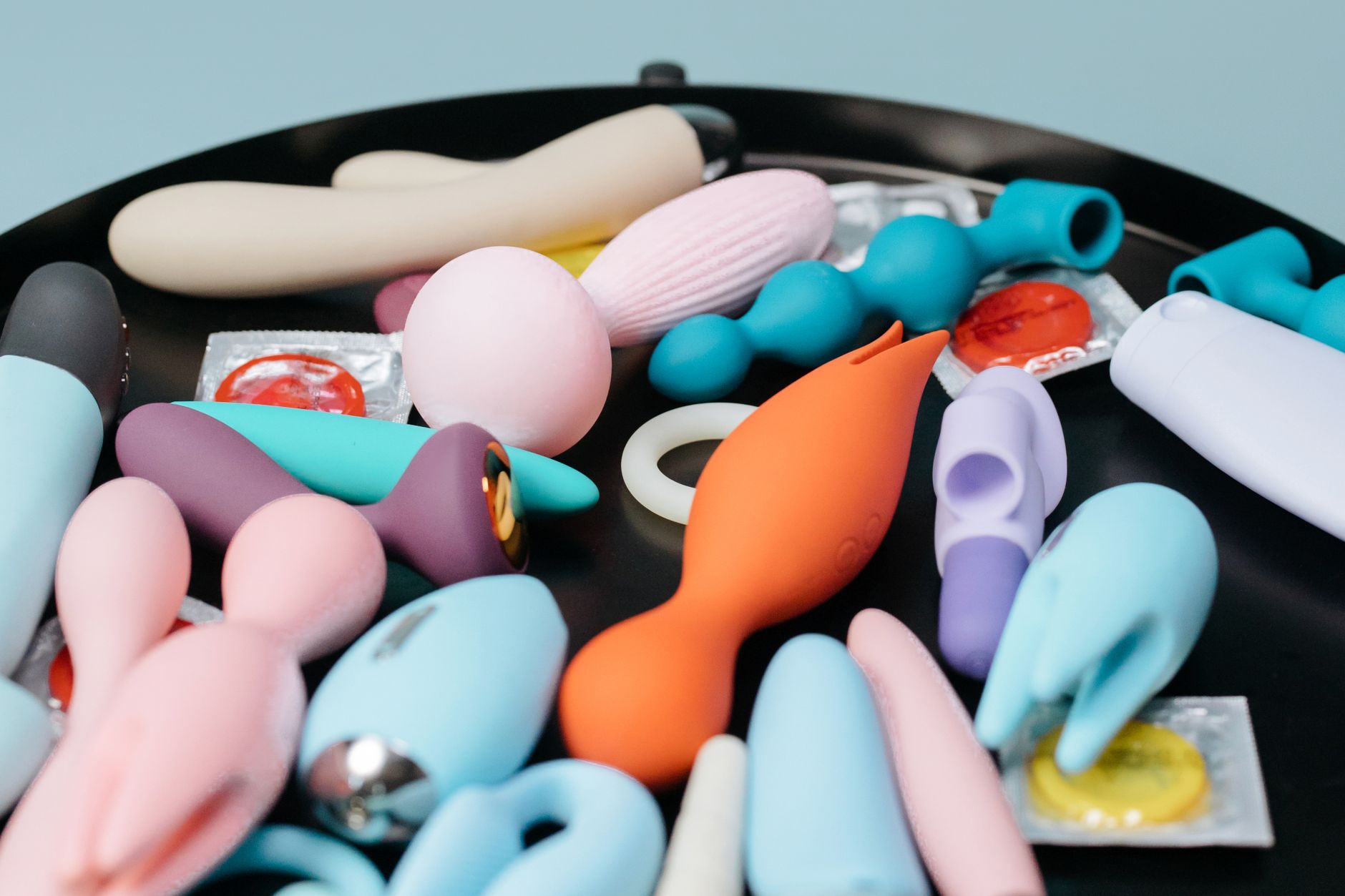
Anxiety during sex isn't weakness. It's your nervous system doing its job too well. Your brain detects a threat (real or imagined) and shuts down arousal hard. Your body tenses. Your mind races. The more you try to force pleasure, the more defensive your nervous system gets. That's the spiral.
When you're anxious, your sympathetic nervous system is running the show. It's designed to protect you from danger, which means it's actively suppressing blood flow to the genitals and shutting down the neurotransmitters that create pleasure. Your body isn't broken. It's doing exactly what it's supposed to do.
Meanwhile, arousal requires the parasympathetic nervous system. The one that kicks in when you feel safe. The one that lets blood flow return, muscles relax, and sensation become possible again.
The problem: you can't just decide to feel safe. But sustained physical stimulation can move you toward that state much faster than breathing exercises or positive self-talk alone.
That's where lemon vibrators come in. They're not a magic fix. They're a tool that lets your body bypass the anxiety gate.
Clitoral vibrators work differently than fingering or penetration because they deliver consistent, precise input. Your brain doesn't have to wonder what's coming next. There's no performance pressure, no moment-to-moment improvisation that keeps you scanning for danger.
Instead, your sensory cortex gets flooded with predictable sensation. Two things happen simultaneously. First, your nervous system realizes it doesn't need to defend you from this stimulus. It's safe. It's rhythmic. It's not going anywhere. Second, blood flow gradually returns to the clitoris, and the neurological cascade toward pleasure actually becomes possible.
It's not instant. And it doesn't work if you're fighting it. But for most people with anxiety, the difference between trying to get aroused through touch and using a lemon clitoral vibrator is the difference between holding your breath and finally taking a real one.
If you're anxious, environment matters enormously. You need to remove as much uncertainty as possible.
Start alone. I don't say this to be restrictive. I say it because you need to prove to yourself that your body can still respond. Once you've felt that response a few times on your own, introducing a partner becomes about connection instead of proving something's wrong with you.
Set a specific time. Spontaneity is romantic. Anxiety doesn't care. Schedule 20 minutes. Lock the door. Put your phone in another room. The predictability itself is calming.
Warm up first. I mean literally. Take a hot shower or bath. Heat relaxes muscles and signals safety to your nervous system. It's not necessary for pleasure, but it helps tip the scales when you're fighting anxiety.
Choose a comfortable position. If you're tense or awkward, anxiety gets another foothold. Lie down. Use pillows. Whatever feels stable and easy.
Start on the lowest setting. Not because you have low sensation, but because a gradual approach feels less overwhelming. Your anxiety might be anticipating intensity. Low, predictable input defuses that.
Focus on the physical sensation only. Not on whether you're getting aroused. Not on whether you "should" be enjoying this. Just the feeling of the vibration against your skin. What does it feel like? Where does it feel strongest? Does it change if you shift slightly?
This is the neurological trick. By directing your attention to sensation itself, you're pulling focus away from the anxiety thoughts. You're not fighting them. You're just crowding them out with sensory information.
If anxiety spikes, don't stop immediately. Pause for a few seconds. Take one conscious breath. Then resume on the same low setting. Your nervous system learns that anxiety doesn't require shutdown. It requires a moment, then return.
Over time (usually 3-5 sessions), your body learns that this stimulus is safe. Arousal starts returning faster. The anxiety still might show up, but it stops being the dominant signal.
The first thing you'll notice is that your body responds again. Blood flow returns. Sensitivity increases. Orgasm becomes possible, sometimes for the first time in months or years.
The second thing is usually grief or anger. You realize how much anxiety has been stealing from you. That's normal and important. Feel it.
The third thing is often reclamation. Once you know your body still works, pleasure stops being something you're anxiously chasing. It becomes something you can access. That shift in power is huge.
Many of my clients report that using a lemon clitoral vibrator was the first time they felt genuinely in control of their own pleasure again. Not performing for a partner. Not fighting their body. Just themselves and sensation.
Anxiety isn't linear. You might have three great sessions and then hit a wall. That's not failure. That's how nervous systems work. They habituate, then they need recalibration.
If anxiety returns, go back to basics. Solo sessions. Low intensity. Scheduled time. Your nervous system isn't broken. It's just asking for reassurance again.
If anxiety is severe enough that even this doesn't help, that's useful information too. It might mean you need to address something else first: therapy, medication adjustment, or a different kind of support. That's not weakness. That's wisdom.
Yes. Arousal and anxiety technically use different neurological pathways, so in theory you could feel both. In practice, though, when anxiety is high, arousal is nearly impossible because your sympathetic nervous system blocks it. The more anxiety loosens, the more arousal becomes available.
Not if you go slowly. The key is meeting yourself where you are, not pushing into intensity that triggers more defensive responses. Start on the lowest setting. If anxiety escalates dramatically, stop and try again tomorrow. Your nervous system isn't ready yet.
It varies wildly. Some people feel a shift within one or two sessions. Others need 4-6 weeks of consistent practice. What matters is not fighting yourself. One predictable session is better than three frantic ones.
Completely. Anxiety is a powerful anesthetic. Your body might be too defended to feel much of anything at first. Keep going. Sensation usually returns faster than you'd expect, usually within the first few sessions.
That can happen, especially if you've been numb for a long time. Your nervous system is waking up and sometimes it overcompensates. Start at the lowest intensity again. You can always increase. You can't unknow intensity once you've felt it.
That depends on your relationship and your comfort level. Some couples find that solo exploration actually rebuilds connection because the person with anxiety regains agency. Others prefer to figure this out together. There's no universal right answer. What matters is your autonomy.
Using a lemon clitoral vibrator when anxiety is high isn't avoiding your feelings. It's actually a profound act of self-knowledge. You're saying, "My nervous system needs a different kind of input to shift out of this state. And I'm willing to give myself that."
That willingness is where healing starts. Not in white-knuckling your way through, but in finding the actual tool that lets your body do what it's designed to do.
Your pleasure matters. Your nervous system's need for safety matters. And they're not in opposition. You just need the right approach to bring them into conversation again.
If you're ready to explore this more deeply or need support beyond what you can manage solo, reach out. That's what we're here for.