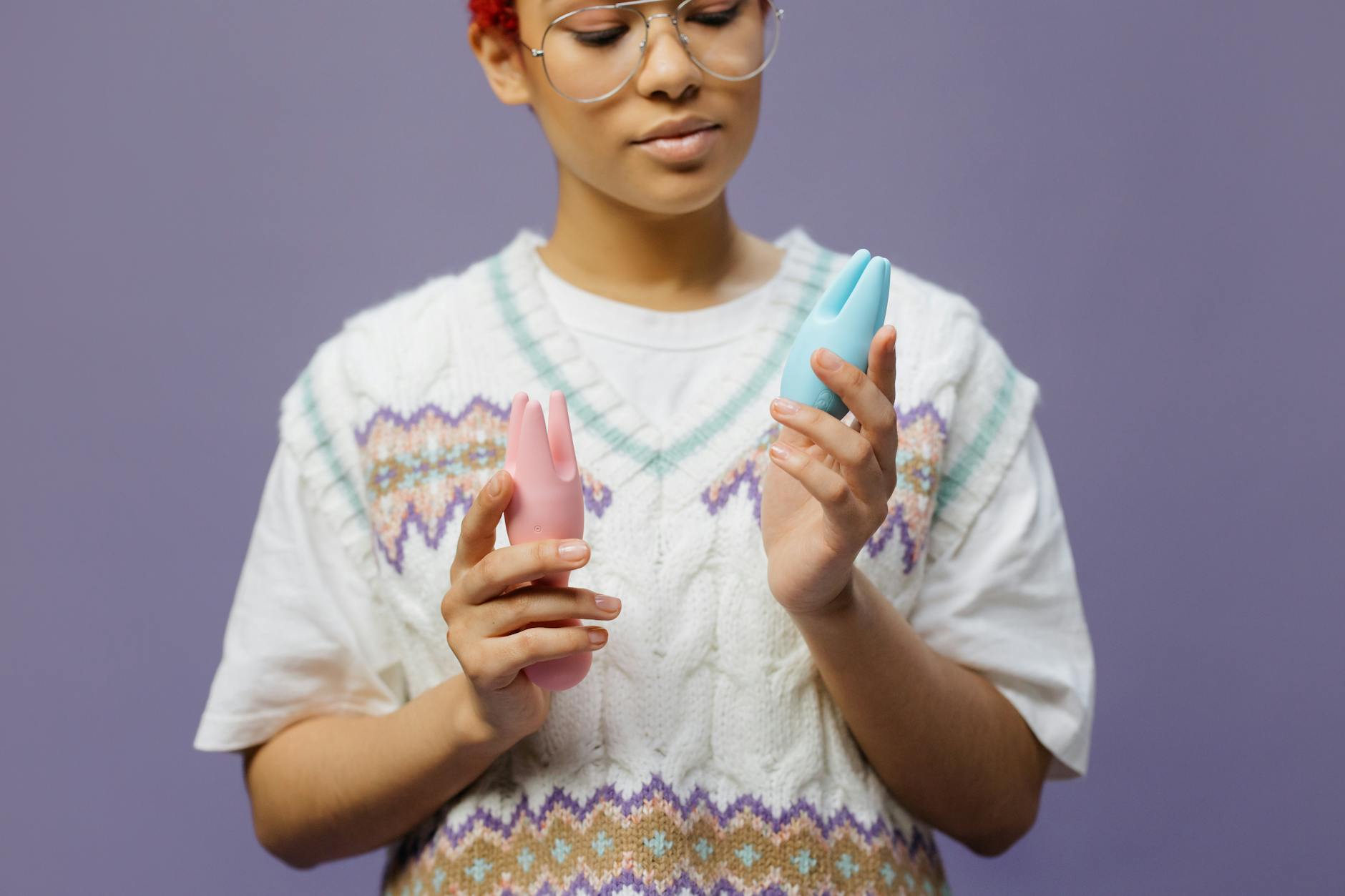
You've got a partner you really like. The sex is good. And somewhere in your nightstand sits a lemon clitoral vibrator that's become part of your pleasure routine. Now comes the question that stops most people cold: do you introduce it, when, and how do you do that without making things weird?
Here's what I know after years of working with couples: bringing a toy into a new relationship is less about the toy and more about what the toy represents. It's a conversation about pleasure, honesty, and what both of you actually want. The good news is that conversation almost always makes sex better, not worse.
The anxiety makes sense. Early sex with someone new carries a lot of invisible weight. You're still figuring out their preferences, their pace, what they find attractive. Adding a vibrator can feel like you're saying "this isn't enough," or worse, that you don't trust them. None of that is true, but the fear is real and it's common.
Here's what actually happens: your new partner is probably also wondering if they're doing it right, if you're genuinely enjoying yourself, if they should be doing something differently. A clitoral vibrator isn't a criticism. It's proof that you're confident about your own pleasure and you trust them enough to bring something authentic into the room.
That's attractive. Even if it doesn't feel that way right now.
I've worked with people who introduced toys on date three and people who waited six months. Both groups say the same thing: the timing wasn't the issue. The conversation was.
That said, here's what I recommend: somewhere between three and eight weeks in, once you've had sex a few times and established some comfort, is a natural window. You're past the "performing politely for each other" phase but not so locked into a routine that adding something new feels threatening.
If you're already past that window, don't panic. There's no expiration date on honesty.
Don't ask permission. Don't apologize. Don't make it A Big Thing.
Just name it as part of your pleasure, the way you'd mention a favorite position or what you like touched. Something like: "I really love using my vibrator solo. I've been thinking it could be fun to incorporate into what we do together. What do you think?"
Notice what that does: it frames the vibrator as your thing (which it is), it's specific (you're naming what you want, not vague), and it asks for their input without asking for permission.
If they seem hesitant, here's the move: "I get it if you want to think about it. But just so you know, it's not about you or what we do. It's about me knowing what feels good for my body. And I think it'd be hotter if you were part of that."
That last part matters. You're not asking them to watch passively. You're asking them to participate in your pleasure.
Don't make it the main event. Use it during foreplay, not as the finale. This does two things: it integrates the vibrator into what you're already doing (so it feels natural) and it takes the pressure off the vibrator being responsible for your orgasm (which can make both of you weird).
Start with penetration or manual touch first. Get aroused. Then bring the vibrator in. That order matters because it lets your partner feel like they're building something with you, not handing off to a toy.
Also, talk through it beforehand. "I'm going to use it on my clitoris when you're inside me," or "I want you to hold it while we kiss." Clarity kills awkwardness.
If your partner wants to hold the lemon clitoral vibrator, that's a huge green flag. Let them. Feeling it in someone else's hands while they're watching your face is wildly intimate in a good way.
For you: if he seems uncomfortable, that's not your job to fix by not using it. That's information. A partner who can't handle you knowing what you want sexually isn't ready for this relationship phase.
For them: some partners worry that if you like the vibrator, you'll prefer it to them. That's not how bodies work. A vibrator does one specific thing really well. A person does a thousand things. They're not in competition.
You can say that directly: "The thing I like about this is how it feels. The thing I like about you is everything else. They're not the same."
If your partner has used toys with past partners, that information might come up. Don't spiral. Different relationships have different intimacy rhythms. What matters is what you two are building now.
This is often easier than you think. If your partner says "hey, I think it'd be hot if you used that," you've hit a relationship sweet spot. They're comfortable with your pleasure and genuinely interested in expanding what you do together.
Some partners love watching. Some love being involved. Some want to control the intensity. None of these is wrong. Have a quick conversation about what they're imagining and what you're comfortable with. Then explore.
One note: if a partner wants the vibrator involved specifically to avoid doing other things (like foreplay or penetration), that's a conversation. The vibrator is an addition, not a shortcut.
Say you bring it out and your partner jokes nervously. Stay calm. Nervous jokes are usually fear in disguise. You can say, "I know it's a weird first time. That's normal. We don't have to use it tonight if you'd rather wait."
That's called taking the pressure off. Often, when you do, the person relaxes and says "actually, no, let's try it."
If your partner refuses entirely, you have a choice to make about whether that's a dealbreaker. Honest answer: in a long-term relationship, this matters. Not because of the vibrator itself, but because it points to larger issues about sexual honesty and your partner's comfort with your autonomy.
Don't do a post-game analysis if everything went great. Just let it be good.
If something felt off, though, check in: "That was different for us. How did it feel?" Listen. Don't defend. If they say "I didn't hate it but I felt weird," that's useful information. Maybe next time you use it differently. Maybe you do it solo first and tell them about it. Maybe you wait a few weeks and try again.
The point is: you're building something together, and that includes your pleasure. A lemon clitoral vibrator is just a tool. The real work is the communication.
You've probably heard this before, but I'll say it again: couples who talk openly about sex have better relationships. Not just better sex, though that too. Better communication in general. More trust. More willingness to be vulnerable.
Introducing a vibrator is basically a masterclass in all three. You're naming what you want. You're asking for support. You're bringing something that matters to you into a shared space.
No. Let the sex be the sex. Once you've established some comfort and rhythm, then bring it up. First-time sex has enough variables without adding new equipment. After a few good encounters, you'll know each other's bodies better and the conversation will feel more natural.
That's the most common fear, so name it directly. Say something like: "I want to be clear about something. This isn't about you not being enough. It's about me knowing exactly what my body needs and trusting you enough to share that." Then give them time to process. Most partners feel relieved when they understand it's not a referendum on their performance.
Absolutely. During penetrative sex is actually ideal for a clitoral vibrator because you're getting stimulation on two fronts. Your partner might find it hot watching you use it, or they might hold it for you. Either way, it's integrated into what you're already doing. No awkwardness required.
That's normal, especially early on. You're still getting comfortable being vulnerable with this person. The fix is simple: guide their hand. Say where you want the vibration. Keep the control with you until you feel confident. Most partners actually like this because they're learning your body in real time.
You don't have to. If the vibrator you have works for your body and feels good, use that one. The familiarity is actually an asset. That said, some people prefer to have a separate toy for couples play, especially if they have a really strong attachment to their solo vibrator. That's a personal choice, not a rule.
Take the same approach. Say yes, but slow. "I think that could be fun. Let me try it on my own first so I can figure out what feels good, then we can go from there." You're not rejecting their idea. You're taking the time you need. Most partners respect that.
Introducing a lemon clitoral vibrator to a new relationship is about more than just pleasure, though that matters. It's about building a partnership where both of you know what you want and trust each other enough to ask for it. That's the opposite of awkward. That's the foundation of something real.
If you're ready to explore this with your partner, trust that instinct. The communication you build around it will matter long after the novelty wears off.