You're in a relationship where sex has become about their orgasm. Not maliciously. Not explicitly. But somewhere between foreplay and climax, your pleasure stopped being the main event and became the opening act. Maybe you're finishing first, then spending the next twenty minutes working toward theirs. Maybe penetration is prioritized even though it doesn't do much for you. Maybe oral sex is something they get and something you give. And maybe you've stopped asking for what you want because the logistics of actually getting there feel exhausting.
First, societal conditioning. If you were socialized as female, you likely grew up in a culture that centered male pleasure as the goal of sex. Your orgasm was optional. Their satisfaction was the mission. That messaging doesn't magically disappear when you commit to someone.
Second, the logistics problem. Penetration is how most partners finish fastest. If that's not your primary pathway to pleasure, you face a choice: either adapt your body to their timeline, or ask for something that takes longer and feel like you're "holding up the show." Many people choose the path of least friction, which is the path that centers their partner.
Third, learned helplessness. After months or years of deprioritizing your own pleasure, you stop actually knowing what you want. The question "What would feel good for you right now?" becomes genuinely hard to answer because you've spent so long calibrating around someone else's answer.
Before any toy enters the picture, you need a conversation that doesn't happen during sex or foreplay. It needs to happen clothed, clear-headed, and ideally when you're both in a good mood. Here's what I tell couples:
Start with this: "I've realized that my pleasure often takes a back seat in our sex life, and I want to change that together." Not accusatory. Not a complaint. A statement of what you've noticed and what you want to shift.
Then name specifically what you've been doing. "I usually orgasm first and then focus on you." Or "We rarely do things that are primarily for my pleasure." Get concrete. Vagueness leads nowhere.
Finally, reframe it as a team problem with a team solution. "I don't think either of us wants this dynamic. I want us to figure out how to make pleasure work better for both of us." This turns it from blame into collaboration.
Your partner might get defensive. That's information. It often means they didn't realize the imbalance existed, or they did and felt too guilty or confused to address it. Neither of those emotions is your job to manage. Your job is to be clear about what you need.
Here's what happens in a lot of couples when one person has been deprioritized: they try adding a vibrator and then get frustrated because the vibrator becomes another performance tool instead of a pleasure tool.
The Lemon Clitoral Vibrator changes that equation because it works fast and it works well. If your pleasure usually takes thirty minutes and requires a very specific sequence, you're asking your partner to give you thirty minutes every time you have sex. That's a reasonable ask, but it's also structurally harder to sustain.
With lemon sexual toys like The Lem, you can actually reach orgasm in five to ten minutes with the right stimulation. Suddenly, "your pleasure first" becomes genuinely feasible instead of theoretically nice but practically impossible.
But here's the crucial part: the vibrator only helps if you're both actually using it with the intention of prioritizing you. If you're using it to speed yourself up so you can get to their part faster, you've just made the problem more efficient. Same imbalance, different timeline.
Start by using it solo first. Spend a few sessions with a lemon adult toy on your own, figuring out what intensity, patterns, and rhythm feel best. This matters because you need to know the answer to "What do you want?" before you're asking your partner to be part of the answer.
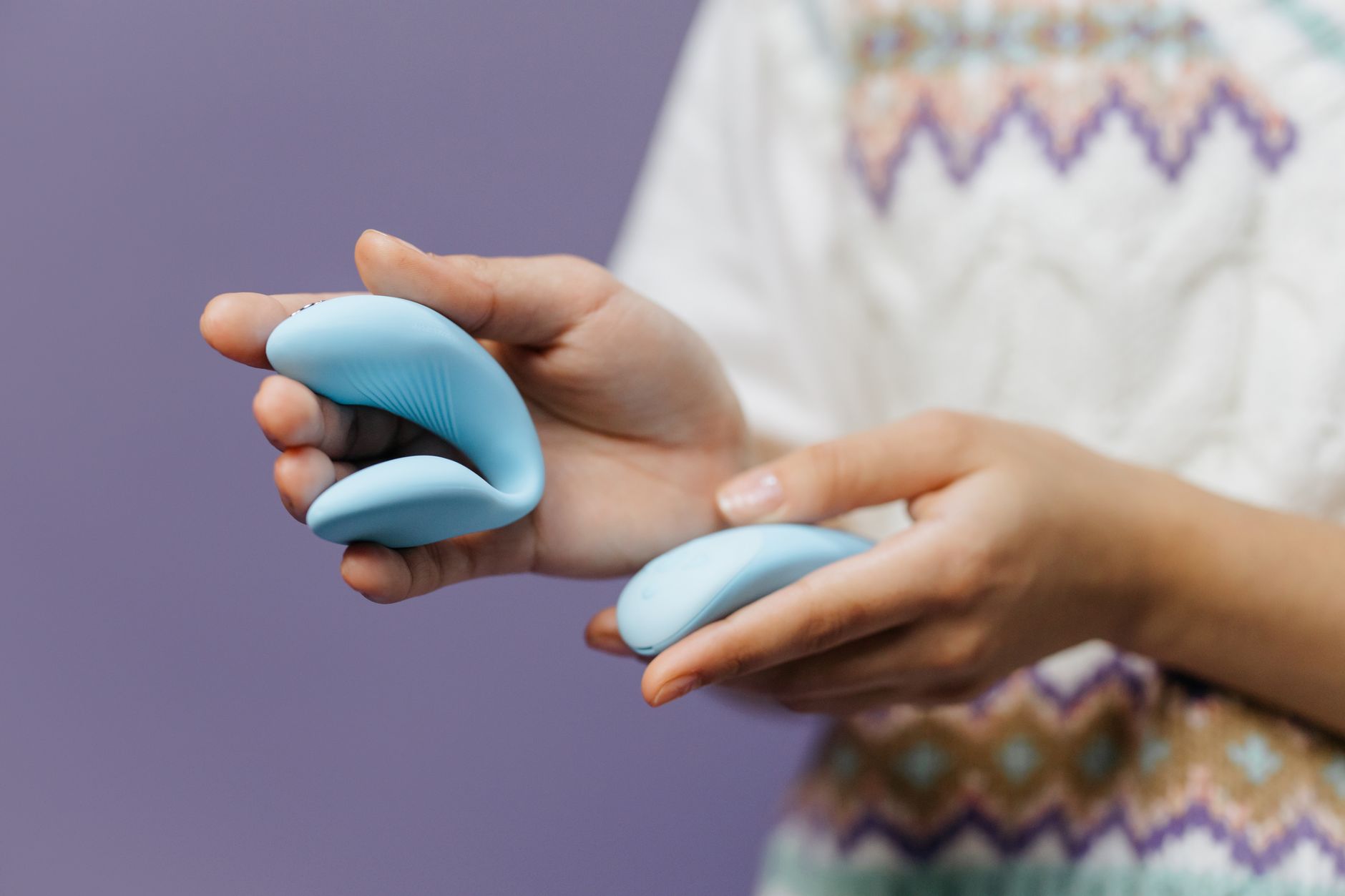
Then introduce it during foreplay, with you in control. You're holding it, you're deciding when and where and how intensely. Your partner is touching you, kissing you, being present, but you're driving the show. This is radically different from watching them use it on you. Control is part of reclaiming pleasure.
Talk explicitly about timing. "I want to use this until I come, and then we can do whatever you'd like." Notice how clear that is. You're not asking permission. You're not apologizing for your timeline. You're stating what's happening.
If your partner is someone who needs their own stimulation while you're using your lemon vibrator, great. They can use their hand, another toy, whatever. The key difference is that your pleasure isn't subsidizing theirs. You're both getting what you need simultaneously, not sequentially.
Your partner might say: "I feel like you're using that instead of letting me touch you." This usually means they feel replaced. The conversation here is: "I'm not replacing you. I'm adding something that actually works for my body. Can we figure out how you can be part of this in a way that feels good to you?"
They might also say: "It makes me feel inadequate." This is harder because it touches actual vulnerability. The honest answer is: Your body deserves to feel good, and that's not a reflection of their skill or attractiveness. Their inadequacy is not your responsibility to manage by receiving less pleasure.
But you can say it gently: "I know it feels that way, and I also know that my body just responds differently to vibration than to hands. That's not about you. That's about anatomy. I want both things, your touch and this tool."
If they continue to resist, you have a bigger problem. Not a sexual problem. A relationship problem. Because what they're essentially saying is "Your pleasure matters less to me than my comfort with how you get there." That's a conversation for a couples therapist, not a blog post.
Once you're both comfortable, you have options. You can use your lemon clitoral vibrator early in the session, come, and then transition into whatever else you both want. You can use it simultaneously with penetration or other activities. You can use it as a cool-down if you're sore.
The point is: you're not fitting yourself around their pleasure anymore. You're designing a sex life where both people's needs are on the menu. Sometimes that looks like fifteen minutes of focus on you. Sometimes it looks like five. But it's intentional, not accidental.
Honestly though, if you're with a partner who genuinely resists your pleasure being prioritized even after a direct conversation, that's worth examining. A sex toy doesn't fix a relationship that fundamentally devalues you. Lemon sexual toys are tools for couples who want to share pleasure better, not tools to compensate for someone who doesn't care about your pleasure at all.
If you're in that situation, talking to a couples therapist might be the first step before adding anything else to the mix. A licensed professional can help you both understand why this dynamic exists and whether you actually want to change it together.
But if your partner is willing to shift and you're both committed to making pleasure mutual, a lemon vibrator is genuinely useful. It's fast, it's reliable, and it makes the conversation about your needs a lot easier to sustain because you're not asking for something impossible. You're asking for something that actually works.
Possibly, but that's usually because the context around it hasn't been clear. If you're introducing a vibrator because you both agreed your pleasure matters, and your partner understands it's about your pleasure, not about replacing them, most people adjust. The feeling of being left out usually comes from surprise or from sensing that this is addressing a problem that was never acknowledged. That's why the conversation first, vibrator second.
That's fine, but notice whether it's shifting back to their control of your pleasure. The healthiest integration I see is when you start solo with it, then together, and then partners can take turns controlling it if you both want that. But you should always have the option to take it back if it stops feeling good. It's your body, your pleasure.
Ask yourself: Am I satisfied? If yes, genuinely, then you're not stuck. But if you're having regular sex that doesn't include your orgasm, or your pleasure is an afterthought, or you've stopped asking for what you want because it feels easier not to, you're stuck. Stuck isn't dramatic. It's just a pattern that's worth changing.
Maybe. Numbness usually comes from one of three things: physical desensitization from repetitive stimulation, emotional disconnection from your partner, or a mismatch between what they're doing and what actually works for you. A vibrator can address the first and the third. It can't fix emotional disconnection. That needs a different kind of attention.
Yes. And you'll need to sit with that feeling without letting it stop you. You were not selfish when you were giving all the pleasure. You were accommodating. Now you're asking for reciprocity. That's not selfish. That's baseline.
That's worth taking seriously in a conversation. Some people withdraw because they feel threatened. Some because they're processing something about themselves. Some because they actually do want to prioritize their own pleasure over yours and a vibrator just made that impossible to ignore. Either way, that's information that belongs in an open conversation, ideally with a therapist present.
Your pleasure is not negotiable. It's not a bonus feature. It's not something you earn by being patient and accommodating. It's a baseline of being in a sexual relationship with someone who actually cares about your experience.
A lemon vibrator is a practical tool. But the real work is permission. Permission to name that something's been off. Permission to ask for what you need. Permission to let your partner's reaction be their reaction while you take care of your own pleasure anyway.
If that feels radical, it's because we've all been taught that good partners are accommodating, selfless, and endlessly patient. And you can be all those things while also insisting that your body gets to feel good. Those two things aren't in conflict. They're both true.