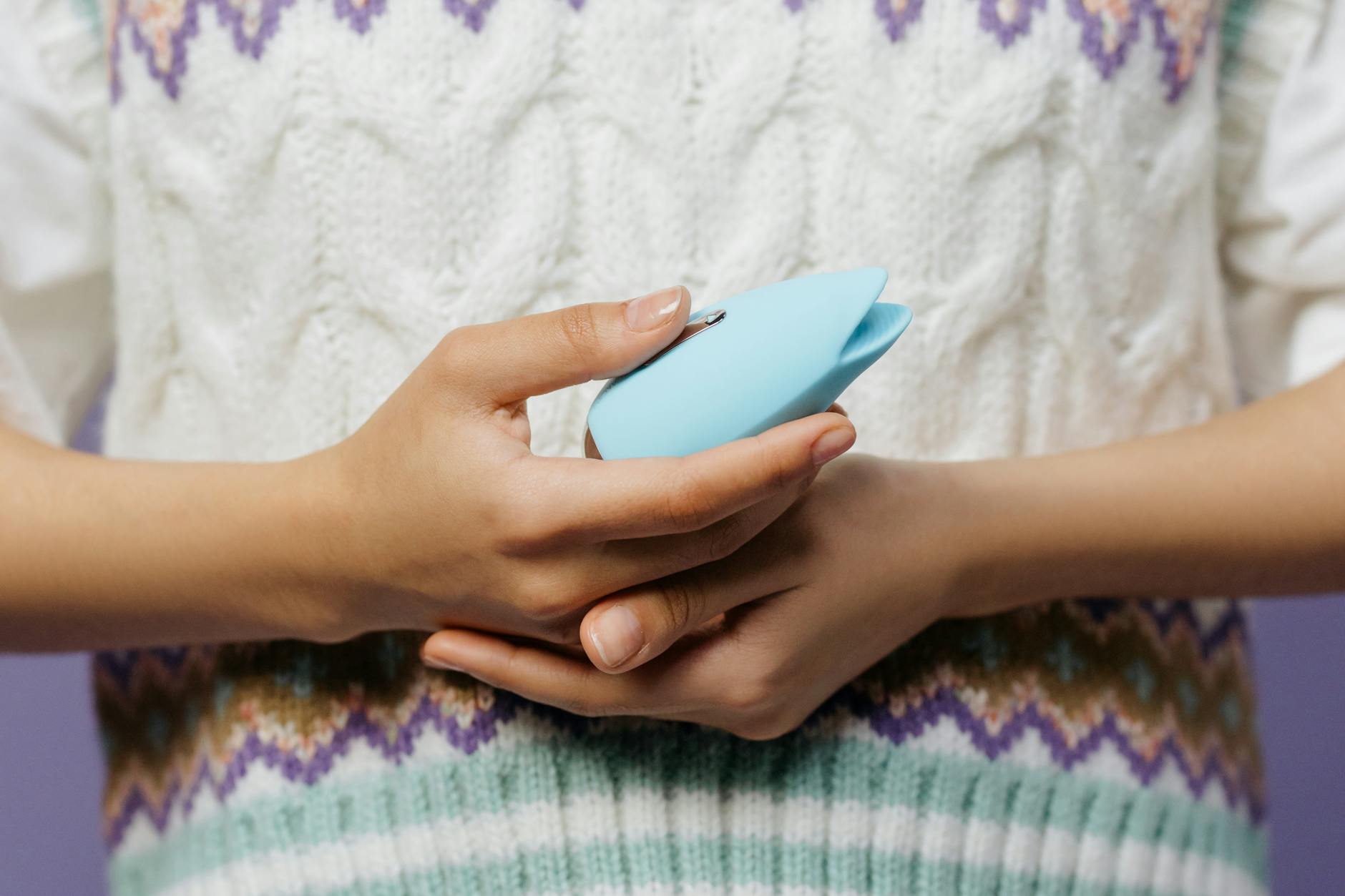
How to Use Lemon Vibrators When Grief Affects Your Desire
Grief numbs pleasure pathways in your brain. Here's how to gently reconnect with sensation, rebuild intimacy with yourself, and honor both your grief and your body's needs.
Grief doesn't just live in your heart. It rewires your nervous system. When you're processing major loss, your brain is literally offline for pleasure. The neural pathways that light up during arousal get dimmed by cortisol and adrenaline. Your libido doesn't disappear because you're broken or because it's disrespectful to feel desire. It disappears because your body is in survival mode.
What people don't tell you: that numbness is temporary, and it's not a sign you should stop trying. It's a sign you need to approach pleasure differently.
Here's the neuroscience part, kept simple. During acute grief, your amygdala (the threat-detection part of your brain) goes into overdrive. That means your pre-frontal cortex (the part that handles reasoning, connection, and pleasure) gets quieter. Your vagus nerve tightens instead of relaxing. Your muscles hold tension. You're literally less available for sensation.
This is why masturbation or sex can feel mechanical, cold, or even impossible during grief. It's not apathy. It's biology.
But here's what changes things: gentle, consistent stimulation from a lemon clitoral vibrator can help reset that nervous system response. Not by forcing arousal, but by giving your body permission to practice feeling something other than pain.
I want to be clear about something. A clitoral vibrator is not therapy for grief. It's not going to make you feel better in any deep way. But it can be a tool for reconnecting with your body when grief has made you feel completely disconnected from it.
There's a difference between "I want to feel pleasure" and "I want to remember I'm still alive." When you're grieving, that second thing is often what you need. The lemon vibrators work because they're simple. No thinking required. No performance. Just sensation.
When you're ready to try again, here's what I recommend. Pick a time when you're not expecting anything from yourself. Not when you're trying to reach an orgasm. Not when you're trying to prove you're "over it." Just when you're curious.
Start with the lowest setting on whichever lemon sexual toy you have access to. The Lem is gentle enough for this phase. Hold it against your clitoris for five to ten seconds. Then pause. Feel what happens. Most people report that the first time back, they feel almost nothing. That's normal. Your body is still processing.
Don't push. The goal is to introduce sensation, not to achieve climax. If you feel numbness, that's information. If you feel a flicker of something, that's progress. Both are okay.
Grief is exhausting. You don't have energy for elaborate rituals. Here's what works: five minutes, three times a week, no expectations.
Pick a time. Maybe after you shower. Maybe before bed. Set a timer so you're not watching the clock. Use your lemon vibrator on low. Let your thoughts wander. Don't try to think sexy thoughts. Don't try to feel anything specific. Just notice what's there.
Over two to three weeks, most people start to notice a shift. The sensation gets clearer. Numbness starts to loosen. You might even feel a spark of something. That's your nervous system slowly remembering it's safe to feel.
If you're partnered, this gets complicated. Your partner might want physical intimacy. You might feel completely unable to show up for it. This is where lemon adult toys become actually useful for couples.
You can use a clitoral vibrator during partnered sex without being "ready" for it emotionally. The vibrator does the sensation work. You get to be present without performing. Your partner gets connection without you having to manufacture arousal you don't have. That's not settling. That's practical.n
Talk about it first. "I'm grieving and my body feels shut down. I want to stay connected to you, but I need help feeling anything right now." A good partner understands. If yours doesn't, that's a different conversation.
When you're numb, the temptation is to jump straight to high intensity. That doesn't work. Your desensitized tissues need time to wake up. Start at pattern one or two on whatever lemon vibrator you're using. Stay there for at least a week before moving up.
Some people find that pattern 2 (usually a steady pulse) works better than steady buzz when they're grieving. It mimics breath. It has a rhythm. Try both. Your nervous system will tell you what it needs.
If you jump to high intensity too soon, you risk re-traumatizing yourself with overstimulation. You'll feel worse, not better. Slow is actually faster.
Here's the part that matters most. When you're grieving, touching yourself with pleasure can feel selfish or even wrong. Like you're betraying the person you've lost by feeling good. That's not true.
Feeling pleasure, even small pleasure, is an act of staying alive. It's you saying to your body: I'm still here. I'm still worth caring for. Even though everything is hard, I'm going to remember what aliveness feels like.
That's not disrespectful. That's resistance. That's honoring your own humanity while you're in pain.
There's a difference between grief-numbness (which can soften with practice) and depression-numbness (which might need professional support). If you're using a lemon clitoral vibrator three times a week for four weeks and still feel nothing, and you also feel unable to get out of bed or do basic care tasks, that's a sign to talk to a therapist.
If you're using it consistently and you notice slow improvement in sensation, even if it's tiny, keep going. That's your nervous system healing.
Grief doesn't have a schedule. Neither does your body's readiness to feel pleasure again. Some people reconnect with sensation in weeks. Others take months. Neither timeline is wrong.
What matters is consistency without pressure. Pick your three times a week. Show up. Use your lemon sexual toy. Notice what's there without judgment. Over time, that practice creates safety. Your body learns it's okay to feel things again.
When you're ready, that feeling will deepen into actual desire. Into orgasm. Into genuine pleasure. It'll come back. It always does. Your nervous system doesn't forget how to feel. It just needs time and patience.
Completely normal. Grief numbs your entire system, including the physical pathways for pleasure. Your clitoris still has nerve endings, but the signal to your brain is muted. That's not a failure. It's actually a sign your nervous system is doing its job by protecting you during crisis. Consistency over weeks, not intensity, is what gently reawakens sensation.
It can if you push too hard too fast. If you jump to high intensity or expect an orgasm, you might feel frustrated or more numb. But gentle, low-intensity play with a lemon clitoral vibrator is usually helpful. You're practicing sensation in a low-pressure way. The key is no expectations. If it feels bad, stop. There's no prize for pushing through.
Yes, and a good one. A lemon vibrator lets you stay physically present and connected without having to manufacture arousal you don't have. The vibrator does the sensation work. You can be emotionally available without being sexually "ready." That's not settling. That's pragmatic intimacy during a hard time.
It varies widely. Some people notice improvement in two to three weeks. Others take two to three months. The variables are how acute the grief is, whether you have depression alongside it, and how consistently you practice. Gentle, regular use of a lemon sexual toy typically speeds reconnection compared to avoiding pleasure entirely, which can extend numbness.
Just practice sensation. Orgasm is not the goal. Reconnecting with your body without pressure is. If an orgasm happens naturally, great. If not, that's fine too. You're training your nervous system to recognize that pleasure is available again. That's the real work. The orgasm follows once safety returns.
It might. Grief isn't linear. You might have a week where sensation returns, then a week where you feel numb again. That's normal. Keep your practice consistent even when it feels pointless. Your body remembers what it learned. Each time you come back to gentle stimulation, you're reinforcing the message that it's safe to feel. Eventually, the waves soften.
Grief is one of the hardest things a human body processes. The fact that pleasure goes numb during that time makes biological sense. But it doesn't have to stay numb.
Using a lemon clitoral vibrator during grief isn't about forcing happiness or healing. It's about gently telling your nervous system that feeling is still possible. That you're still here. That your body still deserves attention and care, even when everything hurts.
Start small. Be consistent. Have patience. Your capacity for pleasure isn't gone. It's just sleeping. And with practice, it wakes up.
If you're struggling with the emotional weight of grief alongside numbness, talking to a therapist can help. Pleasure alone won't heal loss. But reconnecting with your body's capacity to feel is part of staying alive while you grieve. Both matter.
Want to talk through what might work best for your situation? Reach out. We're here.